
Lead Valley Flashing Beside a Parapet Wall
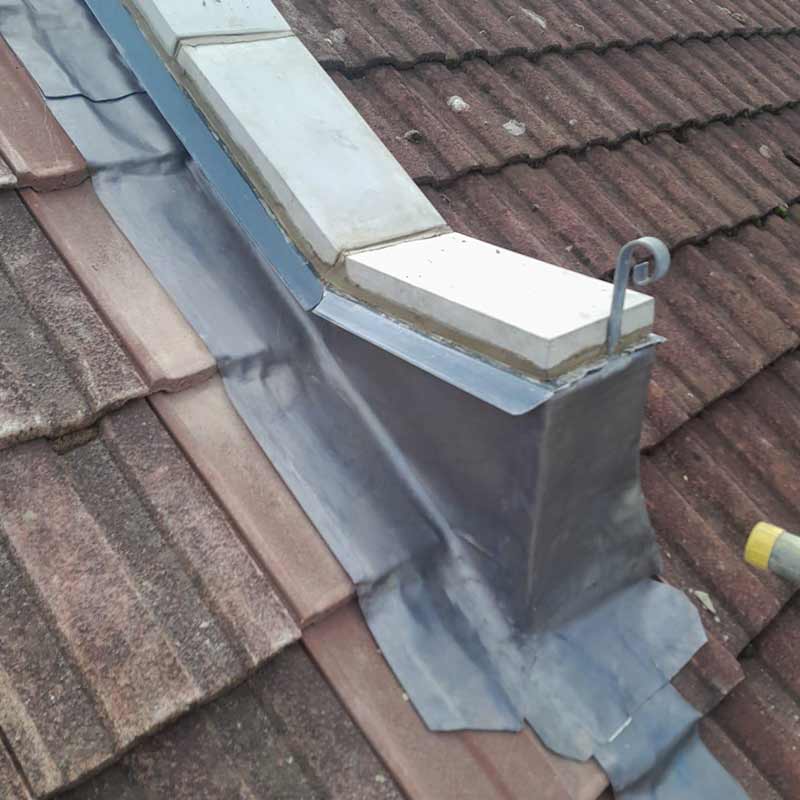
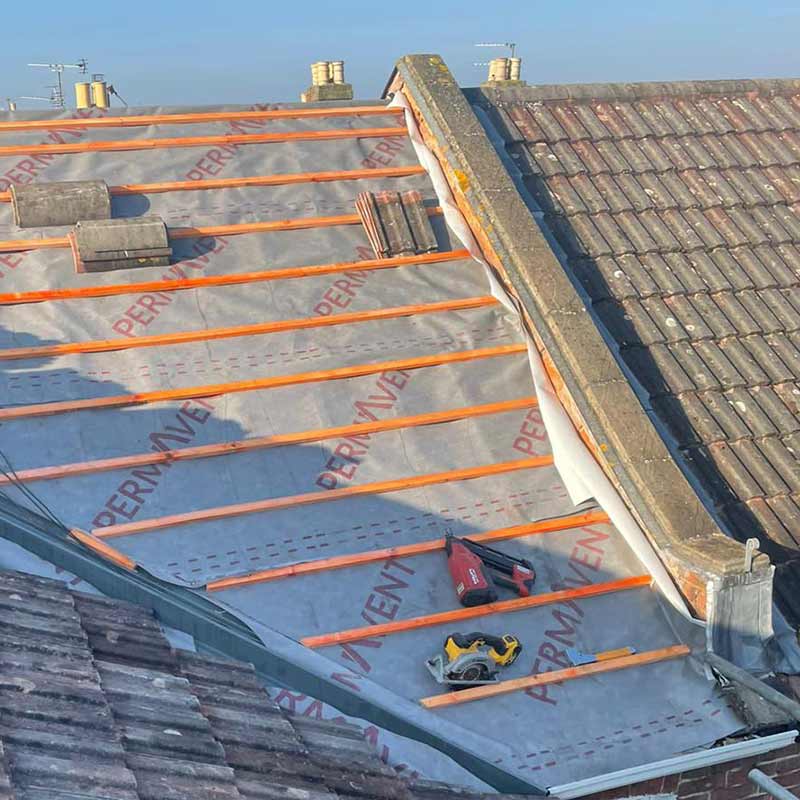
Everyday Roofing completed this lead valley flashing project in Portsmouth beside a parapet wall on a tiled roof. The roof needed a reliable weatherproof detail where the tiles meet the party wall.
First, our team prepared the valley area beside the parapet. We then installed quality lead at the correct thickness for the roof detail. As a result, rainwater can now channel safely away from the wall and tiled roof junction.
This type of leadwork needs careful installation. Otherwise, water can track into the roof and cause internal damp or leaks. Therefore, we shaped and dressed the lead neatly to suit the roof line and parapet wall.
Work Completed
The project included:
- Preparation of the tiled roof valley area
- Installation of new lead valley flashing
- Leadwork fitted beside the parapet wall
- Correct lead thickness selected for the detail
- Weatherproof dressing where the tiles meet the wall
- Coping stones installed on the parapet
- Final checks to ensure rainwater drains correctly
- Site tidy-up after completion
- What Is a Parapet Wall?
A parapet wall sits above roof level and often runs along the boundary of a property. In many cases, it forms part of a party wall between neighbouring homes.
Parapets can be brick built, rendered or capped with coping stones. The coping stones help protect the wall from rainwater. However, the roof junction below still needs proper lead flashing.
Parapet walls became especially popular during the Georgian era. They also appear on many Victorian properties. As a result, many older Portsmouth homes still need specialist leadwork around these areas.
Why Lead Flashing Matters Beside a Parapet Wall
The area beside a parapet wall is a common leak point. Rainwater naturally runs down the pitched roof and collects near the wall junction. Therefore, the lead flashing must guide water away safely.
On this project, the new lead valley flashing channels rainwater away from the tiled roof and parapet wall. This helps reduce the risk of leaks, damp patches and damage to the roof structure.
Lead also suits this type of detail very well. It can be shaped around roof tiles, brickwork and coping stones. In addition, it offers a traditional finish that works well on older properties.
Coping Stones and Weather Protection
The parapet wall was finished with coping stones. These sit on top of the wall and help shed rainwater away from the brickwork.
However, coping stones alone do not protect the roof junction. The lead flashing below still plays a key role. Together, the coping stones and leadwork create a stronger weatherproof detail.
This combination helps protect the wall, roof tiles and internal structure from water ingress.
Finished Result
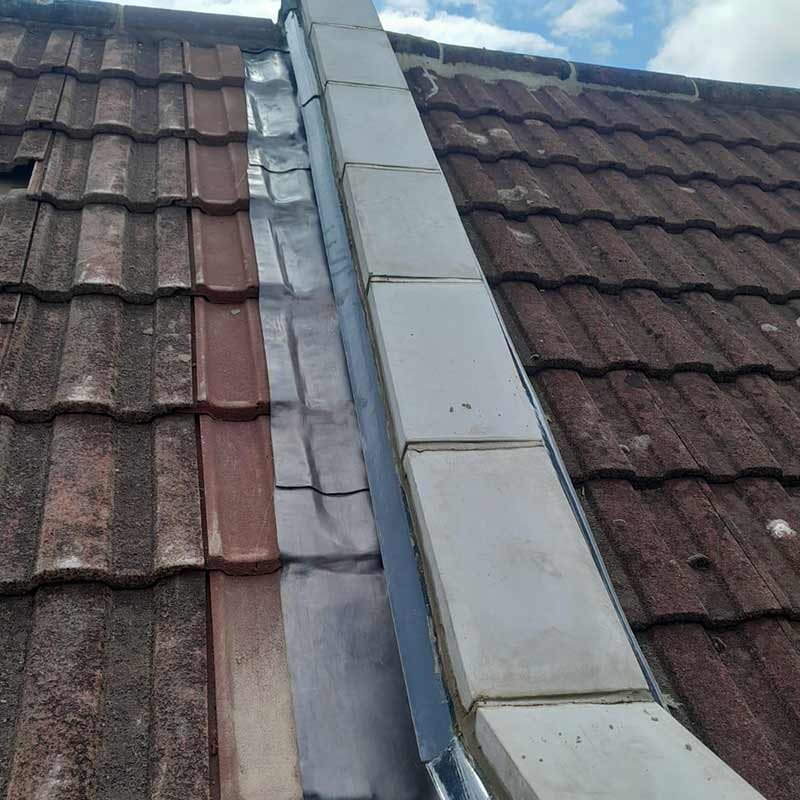
The finished lead valley gives the roof a neat and durable weatherproof detail. It also improves rainwater flow beside the parapet wall.
The new coping stones complete the top of the wall. Meanwhile, the lead flashing protects the lower junction where the roof meets the party wall.
This project is a good example of specialist lead flashing in Portsmouth. For damaged tiles, leaks or related roofing issues, we also provide roof repairs in Portsmouth.
Client Testimonial
“Everyday Roofing did a great job repairing the roof detail beside our parapet wall. The team explained the leadwork clearly and kept everything tidy. The finished flashing looks very neat, and the roof now drains properly.”